
Overview
Many travelers dream of climbing Mount Kilimanjaro, but one of the most common questions is:
“How hard is Mount Kilimanjaro?”
Although Kilimanjaro is considered a non-technical mountain, reaching Uhuru Peak is still a serious physical and mental challenge. Climbers face long trekking days, cold temperatures, steep elevation gain, and high altitude conditions that affect the body differently at extreme elevations.
The good news is that thousands of beginners successfully climb Kilimanjaro every year with proper preparation, route selection, acclimatization, and experienced mountain guides.
Is Kilimanjaro Technically Difficult?
Mount Kilimanjaro is not a technical climbing mountain.
Unlike mountains that require:
- Ropes
- Ice axes
- Harnesses
- Rock climbing experience
Kilimanjaro is primarily a trekking mountain.
Most routes involve walking uphill for several days on mountain trails. No technical mountaineering skills are required for standard routes.
This makes Kilimanjaro achievable for many first-time trekkers.
Read our guide about all route on Kilimanjaro Mountain
What Makes Kilimanjaro Difficult?
Even though Kilimanjaro does not require technical climbing, several factors make it physically demanding.
Altitude Is the Biggest Challenge
The biggest difficulty on Kilimanjaro is altitude.
Uhuru Peak stands at:
5,895 meters(19,341 ft)
At this elevation:
- Oxygen levels are significantly lower
- Breathing becomes harder
- Fatigue increases rapidly
- Headaches and nausea may occur
Altitude sickness affects climbers regardless of fitness level.
Many trekkers who are physically strong still struggle with high elevation if they acclimatize poorly.
Long Trekking Days
Most Kilimanjaro climbs involve:
- 5 to 9 days of trekking
- Several hours of walking daily
- Steep uphill and downhill sections
- Summit night hiking in darkness
Trekkers must maintain energy and endurance throughout the expedition.
Summit Night Is Extremely Challenging
Summit night is considered the hardest part of climbing Kilimanjaro.
Climbers begin around midnight and trek for many hours toward Uhuru Peak in:
- Freezing temperatures
- Strong winds
- Darkness
- Thin air
Fatigue becomes very intense during the final ascent.
Mental determination becomes just as important as physical fitness during summit night.
Cold Weather Conditions
Temperatures change dramatically depending on altitude.
Lower mountain areas may feel warm and humid, while summit zones become extremely cold.
Near the summit:
- Temperatures often fall below freezing
- Snow and ice are common
- Wind chill increases discomfort
Proper mountain clothing is essential.
How Fit Do You Need to Be?
You do not need to be an athlete to climb Kilimanjaro, but good physical fitness is extremely important.
Ideal preparation includes:
- Hiking practice
- Cardio training
- Endurance exercises
- Strength training
- Walking with a backpack
Trekkers who prepare physically usually enjoy the experience much more.
Can Beginners Climb Kilimanjaro?
Yes — many beginners successfully climb Kilimanjaro every year.
The keys to success include:
- Choosing the right route
- Proper acclimatization
- Slow trekking pace
- Good physical preparation
- Experienced guides
Routes such as:
- Lemosho Route
- Machame Route
- Northern Circuit Route
are often recommended for beginners because they provide better acclimatization.
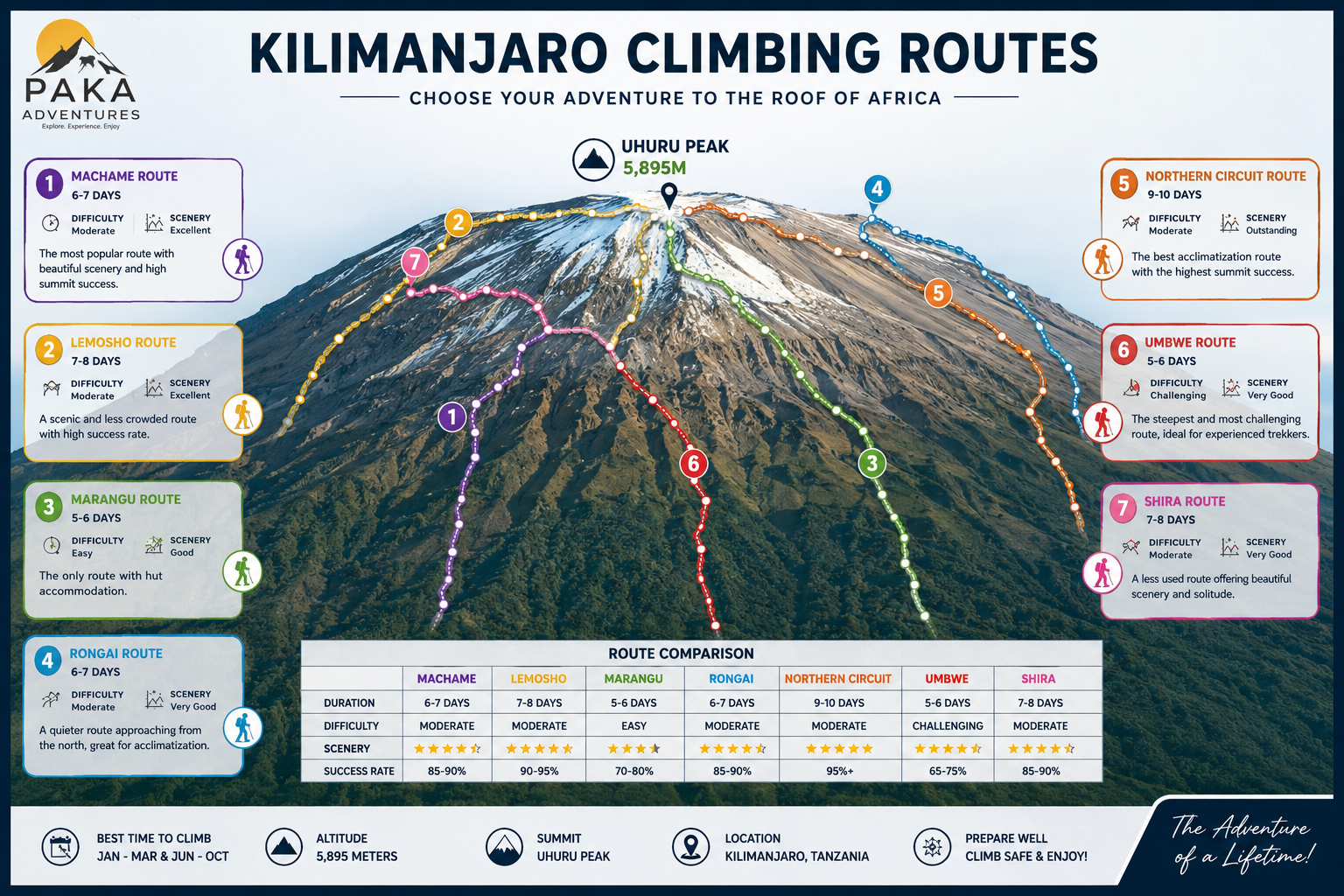
Which Kilimanjaro Route Is Easiest?
Marangu Route
Often considered physically easier because of:
- Hut accommodation
- Shorter distances
- Comfortable sleeping conditions
However, shorter acclimatization can reduce summit success.
Rongai Route
Known for:
- Gradual ascent
- Quiet trails
- Moderate difficulty
Good option for climbers wanting a steadier pace.
Which Kilimanjaro Route Is Hardest?
Umbwe Route
The most difficult standard route because of:
- Steep ascent
- Rapid altitude gain
- Limited acclimatization time
Best suited for experienced trekkers.
How to Make Kilimanjaro Easier
Choose a Longer Route
Longer itineraries improve acclimatization and increase summit success rates.
Best routes include:
- Lemosho Route
- Northern Circuit Route
- Machame Route
Learn about all route to climb Kilimanjaro
Walk Slowly (“Pole Pole”)
Kilimanjaro guides encourage climbers to walk slowly to conserve energy and adjust to altitude.
Read our blog about Altitude sikness
Stay Hydrated
Drinking enough water helps reduce altitude-related symptoms.
Train Before the Climb
Physical preparation improves endurance and recovery during trekking days.
Pack Proper Gear
Warm clothing, waterproof layers, and good hiking boots make trekking safer and more comfortable.
Read our blog about what to pack for kilimanjaro climb
Mental Challenge of Kilimanjaro
Climbing Kilimanjaro is not only physical — it is also mental.
Trekkers face:
- Fatigue
- Cold weather
- Early wake-up times
- Long trekking hours
- Altitude discomfort
Positive mindset and determination are extremely important during difficult sections.