
A walking safari in Tanzania offers one of the most authentic ways to experience Africa’s wilderness. Unlike traditional game drives, a guided walking safari allows you to slow down, observe nature closely, and discover the smaller details that are often missed from a vehicle.
Led by experienced safari guides and armed park rangers, walking safaris provide a deeper connection to the landscape, wildlife, and ecosystems that make Tanzania one of the world’s leading safari destinations. From tracking animal footprints and identifying bird species to learning about medicinal plants and local conservation efforts, every walk becomes an educational and memorable adventure.
What is a Walking Safari?
A walking safari is a guided wilderness experience where visitors explore national parks, game reserves, and conservation areas on foot. The focus is not only on spotting large animals but also understanding the environment through the eyes of professional guides.
Walking safaris typically take place during the cooler hours of the morning or late afternoon when wildlife activity is high and temperatures are comfortable. Distances and difficulty levels vary depending on the location and the interests of the participants.
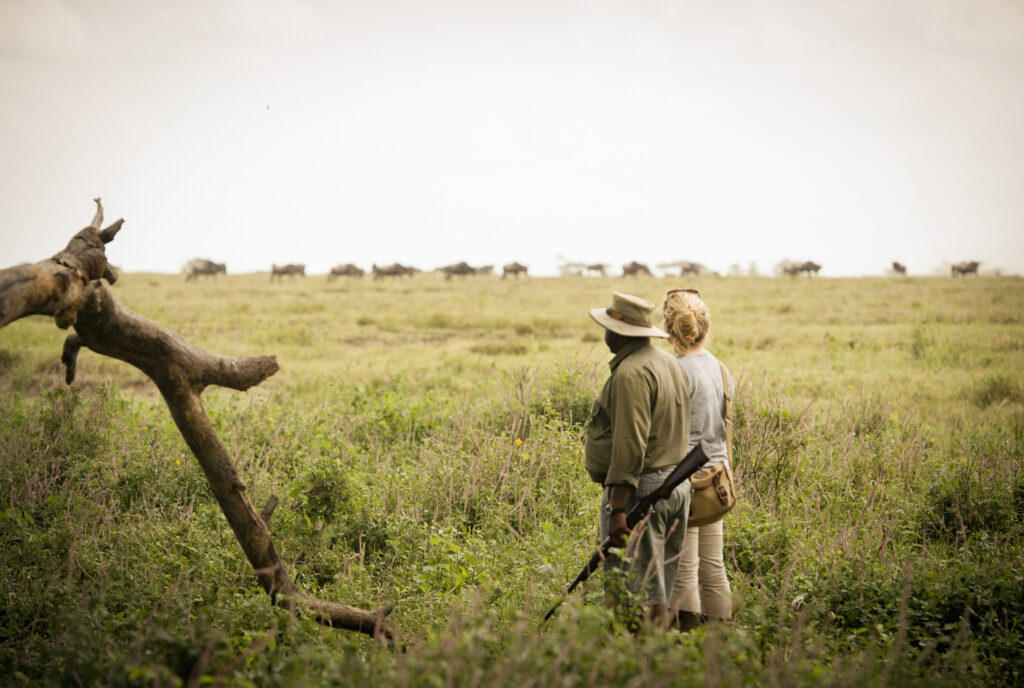
Best Places for Walking Safaris in Tanzania
Nyerere National Park
Formerly part of the Selous Game Reserve, Nyerere National Park is one of the best destinations for walking safaris in Tanzania. The vast wilderness, low visitor numbers, and diverse wildlife make it ideal for exploring on foot. Visitors may encounter giraffes, zebras, antelope species, and a variety of birdlife while learning about the ecosystem from experienced guides.
Ruaha National Park
Ruaha offers one of the most rewarding walking safari experiences in East Africa. The park’s rugged landscapes, ancient baobab trees, and rich wildlife populations create a dramatic setting for guided walks. Ruaha is particularly known for its large elephant herds, predators, and remote wilderness atmosphere.
Tarangire National Park
Tarangire is famous for its giant baobab trees and large elephant populations. Walking safaris here provide opportunities to observe wildlife tracks, birdlife, and seasonal migration routes while enjoying stunning views of the surrounding landscape.
Arusha National Park
Located close to Arusha town, Arusha National Park offers accessible walking safaris suitable for travelers with limited time. Guided walks often include encounters with giraffes, buffaloes, zebras, and various primate species in a scenic environment dominated by Mount Meru.
What Wildlife Can You See on a Walking Safari?
While sightings vary depending on the location and season, walking safaris commonly reveal:
- Giraffes
- Zebras
- Impalas
- Wildebeest
- Buffaloes
- Warthogs
- Elephants (from safe distances)
- Numerous bird species
- Reptiles and insects
- Unique plant life and medicinal vegetation
Guides also help visitors identify animal tracks, droppings, feeding signs, and other evidence of wildlife activity that are often overlooked during traditional safaris.
Why Choose a Walking Safari?
A More Immersive Experience
Walking through the bush allows travelers to engage all their senses. You hear the sounds of nature, feel the terrain beneath your feet, and gain a greater appreciation for the environment.
Learn from Expert Guides
Professional guides share valuable insights into wildlife behavior, ecology, tracking techniques, and local conservation efforts.
Unique Photography Opportunities
Without the barrier of a vehicle, photographers can capture landscapes, plants, wildlife signs, and natural details from a completely different perspective.
Perfect Addition to a Traditional Safari
Many travelers combine walking safaris with game drives, boat safaris, or beach holidays in Zanzibar to create a more complete Tanzania safari experience.
Is a Walking Safari Safe?
Yes. Walking safaris in Tanzania are conducted by trained professional guides and, where required, armed park rangers. Safety briefings are provided before each walk, and guides carefully select routes based on wildlife activity and environmental conditions.
Participants are always required to follow guide instructions and maintain a respectful distance from wildlife.
What to Bring on a Walking Safari
For the best experience, consider bringing:
- Comfortable walking shoes or hiking boots
- Lightweight clothing in neutral colors
- Hat and sunglasses
- Sunscreen
- Insect repellent
- Reusable water bottle
- Camera or binoculars
- Small daypack
Best Time for Walking Safaris in Tanzania
Walking safaris are available throughout the year, but the dry season from June to October generally offers the best conditions. Wildlife is easier to locate around water sources, vegetation is less dense, and walking trails are more accessible.
The green season from November to March also provides excellent birdwatching opportunities and beautiful landscapes.
Walking Safari Tours with Paka Adventures
Paka Adventures offers guided walking safaris in some of Tanzania’s most spectacular wilderness areas. Whether you are interested in a short bush walk, a multi-day walking safari, or combining a walking experience with a classic Tanzania safari, our team can create an itinerary that matches your interests and travel style.
From the remote wilderness of Ruaha and Nyerere to the scenic landscapes of Tarangire and Arusha National Park, walking safaris offer an unforgettable way to discover Tanzania beyond the traditional game drive.